

Blog
Industrial Reverse Osmosis in 2026: Designing RO Systems for High Reliability, Lower Energy, and Longer Membrane Life

Why industrial RO remains a core technology
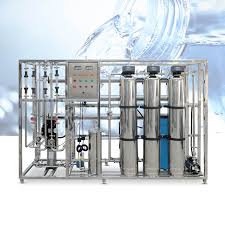
Reverse osmosis (RO) has become one of the most important technologies for industrial water treatment because it can reduce dissolved salts, hardness, silica, nitrate, organic contaminants, and many trace pollutants when the system is designed correctly. For industrial users, RO is not simply a membrane skid; it is a complete process that includes raw-water characterization, pretreatment, chemical conditioning, membrane selection, pressure control, instrumentation, cleaning strategy, and operator discipline.
The real design starts with the water analysis
A reliable RO design starts with a complete water analysis. Conductivity and TDS are not enough. The designer must review hardness, alkalinity, silica, sulfate, chloride, iron, manganese, turbidity, SDI, TOC, free chlorine, pH, temperature, and microbiological risk. These values determine scaling tendency, fouling potential, membrane compatibility, recovery limit, required pretreatment, antiscalant chemistry, and cleaning frequency. Water temperature is especially important because it changes viscosity, permeate flow, salt passage, and pump pressure.
Pretreatment is the insurance policy of RO
Most membrane failures are not caused by the membrane itself; they are caused by insufficient pretreatment or unstable operation. A practical pretreatment train may include multimedia filtration, activated carbon, softening, ultrafiltration, cartridge filtration, acid dosing, sodium metabisulfite dosing, antiscalant dosing, or biological control. The correct configuration depends on the source: well water, municipal water, surface water, recycled wastewater, or brackish water. The goal is to deliver stable feed water to the membrane with low SDI, controlled oxidants, minimal suspended solids, and a predictable scaling index.
Recovery, flux, and pressure must be balanced
High recovery can reduce wastewater volume, but excessive recovery increases scaling risk and membrane stress. High flux can reduce capital cost, but it may increase fouling and cleaning frequency. Higher pressure may increase permeate production, but it also increases energy consumption and mechanical stress. Modern RO design is therefore a balancing exercise: the best system is not the one with the highest recovery on paper, but the one that maintains stable normalized permeate flow, stable salt rejection, and acceptable differential pressure over time.
Monitoring should be based on normalized performance
Operators should not judge RO health only from raw flow and pressure readings. Temperature, feed salinity, and pressure changes can make the same system appear better or worse than it really is. Normalized permeate flow, normalized salt passage, and normalized differential pressure are more useful indicators. When normalized permeate flow decreases, fouling or scaling may be developing. When salt passage increases, membrane damage, oxidation, poor sealing, or severe scaling may be present. When differential pressure rises, channel plugging or particulate fouling is likely.
CIP is a maintenance procedure, not a rescue operation
Clean-in-place (CIP) should be planned before severe loss of performance. Acid cleaners are typically used for inorganic scaling such as carbonate or metal deposits. Alkaline cleaners are usually applied for organic matter, biofilm, oils, and colloidal fouling. Some systems require enzyme or specialty cleaners. The cleaning chemical, temperature, pH, flow direction, contact time, and rinse quality all influence the result. Waiting too long before cleaning can make deposits compact, biologically mature, or chemically irreversible.
How Noor & Hayat Khalij Fars approaches RO projects
Noor & Hayat Khalij Fars designs industrial RO systems by combining water analysis, process calculations, correct pretreatment, appropriate membrane selection, and a realistic operating plan. The company can support clients with new RO design, retrofit of existing systems, antiscalant selection, CIP procedure development, membrane troubleshooting, and operator training. This integrated approach helps reduce unexpected shutdowns, membrane replacement costs, and unstable product-water quality.
Frequently Asked Questions
What is the most common reason for RO failure?
The most common causes are poor pretreatment, incorrect chemical dosing, oxidant exposure, biological fouling, scaling, and lack of performance monitoring.
Can RO be used for recycled water?
Yes, but recycled water usually needs stronger pretreatment, better biological control, and careful monitoring because organic and microbiological fouling risks are higher.
When should RO membranes be cleaned?
Cleaning is usually considered when normalized permeate flow drops, normalized salt passage rises, or differential pressure increases beyond site-specific limits.
Call to Action
Send your latest water analysis and required product-water capacity to Noor & Hayat Khalij Fars for an engineering review of RO design, pretreatment, and operating strategy.
Technical References for Editorial Review
- S. EPA, Overview of Drinking Water Treatment Technologies, 2026: https://www.epa.gov/sdwa/overview-drinking-water-treatment-technologies
- CDC, How Water Treatment Works: https://www.cdc.gov/drinking-water/about/how-water-treatment-works.html
- WHO, Safe drinking-water from desalination, 2011: https://www.who.int/publications/i/item/WHO-HSE-WSH-11.03